
An industrial block ice machine is designed to produce large, solid ice blocks for businesses that need reliable cooling, storage, transportation, or ice distribution. Common users include ice plants, fishery operators, seafood markets, food processors, cold-chain providers, and construction projects that use ice for concrete cooling.
However, choosing the right block ice machine is not only about selecting the highest daily output. Ice block size, production cycle, local climate, water supply, electrical requirements, handling equipment, and the final use of the ice can all affect the best solution for your operation.
This guide explains the key factors to consider before investing in an industrial block ice machine.
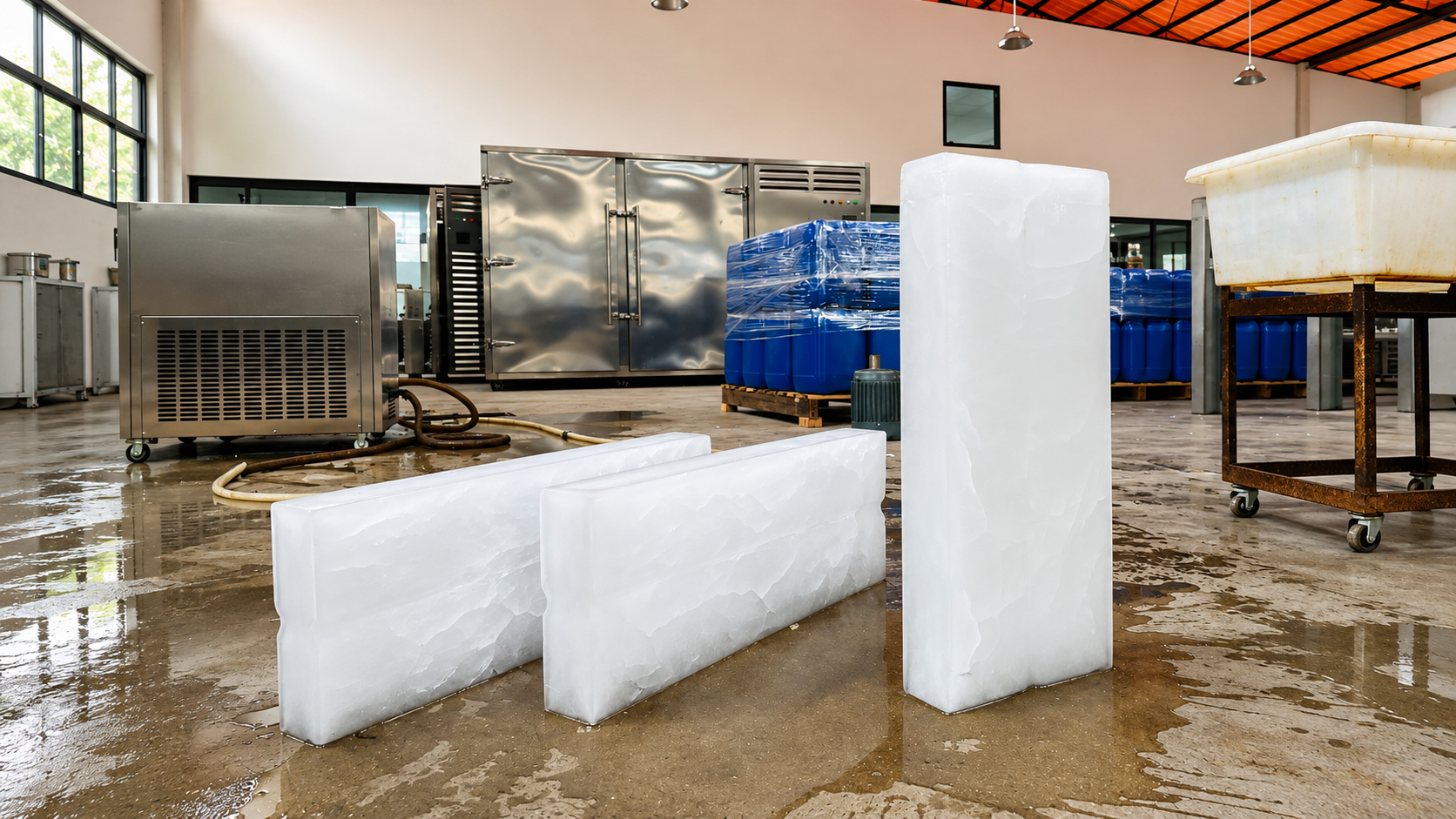
What Is an Industrial Block Ice Machine?
An industrial block ice machine produces large rectangular blocks of ice in batches. Depending on the application, a block may be made in different weights and dimensions, such as 5 kg, 10 kg, 25 kg, or 50 kg per block.
Compared with standard commercial cube ice makers, block ice machines are designed for larger-scale production and heavy-duty cooling applications. The finished ice can be stored, transported, crushed, cut, or supplied directly to end users.
Typical applications include:
- Ice plants and ice distribution businesses
- Fishery vessels, seafood markets, and fish processing facilities
- Food processing and agricultural cooling
- Cold-chain transportation and temporary cooling
- Concrete cooling projects
- Ice carving, events, and specialty ice supply
Start with Your Daily Ice Demand
Daily production capacity is usually the first factor buyers consider. Before selecting a machine, calculate how much ice your business needs during its busiest operating period—not only the average day.
Ask these questions:
- How many kilograms or tons of ice are required per day?
- Is the ice produced for internal use, resale, or both?
- Will demand increase during hot seasons?
- How much reserve capacity is needed for equipment maintenance or peak demand?
- Will the machine operate continuously or only during selected hours?
A machine with insufficient capacity can limit deliveries and production. On the other hand, choosing an oversized system without enough demand can increase the initial investment, energy use, and storage requirements.
For ice plants and distributors, the production plan should also include the time needed for freezing, harvesting, handling, storage, and delivery.
Choose the Right Ice Block Size
Block size should match the needs of your customers and your handling process.
Smaller blocks may be easier to carry, sell, crush, and distribute. Larger blocks can be useful when customers need longer-lasting cooling or when ice is transported before being broken into smaller pieces.
When choosing block size, consider:
- End-use industry
- Manual or mechanical handling
- Transportation distance
- Storage space
- Whether the ice will be crushed or cut
- Local customer preferences
- Labor availability
For example, seafood buyers may need block ice that can be crushed efficiently for packing and display. Ice distributors may need a standard block weight that is convenient for loading and resale. Construction projects may require large volumes of ice for temperature control rather than small retail-ready blocks.
Direct Cooling vs. Brine Block Ice Machines
Industrial block ice machines are commonly available in direct cooling and brine-based configurations. The right choice depends on your production goals, ice application, installation conditions, and operating preferences.
Direct Cooling Block Ice Machines
A direct cooling block ice machine freezes water through direct refrigeration. This system is often selected by buyers looking for a more automated process and cleaner ice production workflow.
Potential considerations include:
- Ice block size and mold design
- Production cycle time
- Automation level
- Water quality requirements
- Installation footprint
- Electrical configuration
Brine Block Ice Machines
Brine systems use chilled saltwater to freeze ice in cans or molds. This type of system has traditionally been used in larger block ice production operations.
Buyers should evaluate:
- Brine tank management
- Ice can maintenance
- Harvesting process
- Labor requirements
- Site conditions
- Long-term operating and maintenance plans
Do not select a system based only on the initial price. Compare the complete production process, including water treatment, labor, harvesting, storage, and maintenance.
Consider Your Local Climate and Water Conditions
Real ice output can be affected by ambient temperature, water temperature, ventilation, and operating conditions. A machine installed in a hot tropical climate may require a different system design than one installed in a cooler location.
Before finalizing a block ice machine, confirm:
- Average and peak ambient temperatures
- Incoming water temperature
- Water quality and treatment needs
- Available power supply and frequency
- Ventilation conditions
- Installation location
- Drainage requirements
Water quality is especially important when the ice will be used for food, seafood, beverages, or other applications where cleanliness matters. A suitable water treatment plan should be considered as part of the overall project rather than as an afterthought.
Plan for Ice Harvesting and Handling
Making the ice is only one part of the operation. A complete industrial ice production system also needs an efficient way to harvest, move, store, and deliver the blocks.
Depending on capacity and block size, your project may require:
- Ice harvesting equipment
- Hoists or lifting systems
- Ice block pushers or conveyors
- Ice crushers
- Ice cutting equipment
- Cold storage rooms
- Insulated transport solutions
If the handling process is not planned properly, labor costs and ice breakage can reduce the efficiency of the entire operation. For larger projects, it is important to consider the movement of ice from the machine to cold storage and then to loading areas.
Do Not Ignore Cold Storage Capacity
A block ice machine needs matching storage capacity. Without adequate cold storage, production may be interrupted or finished ice may melt before delivery.
Cold storage planning should consider:
- Maximum daily ice production
- Delivery frequency
- Peak-season inventory
- Space for staff and handling equipment
- Floor drainage
- Loading access
- Insulation and temperature control
For an ice distribution business, storage is not simply a backup area. It is part of the production and delivery system.
Key Questions to Ask a Block Ice Machine Manufacturer
Before purchasing, ask the manufacturer or supplier for a clear proposal based on your actual operating conditions.
Important questions include:
- What is the rated daily ice output under specified test conditions?
- What ice block sizes and weights can the machine produce?
- What is the freezing cycle for each block size?
- Which electrical options are available for my country or project site?
- What water treatment is recommended?
- What harvesting and handling equipment is included or recommended?
- What installation space, drainage, and ventilation are required?
- Is cold storage included in the solution?
- What spare parts and technical support are available?
- Can the system be configured for future capacity expansion?
A professional proposal should help you understand the full system, not only the ice machine itself.
Choose a Solution, Not Only a Machine
The best industrial block ice machine is the one that matches your actual production target, local operating environment, ice application, and delivery workflow.
For a small ice distribution project, the priority may be compact installation and easy handling. For a fishery or seafood processing operation, the focus may be stable supply, hygienic water handling, and ice crushing. For a large ice plant, capacity, automation, storage, and logistics may become the most important factors.
At BORYVA, we help buyers evaluate block ice production requirements and discuss suitable equipment configurations for their market and application.
Need Help Planning Your Block Ice Project?
BORYVA helps buyers evaluate block ice production requirements and discuss suitable equipment configurations for their market and application. Share your required daily output, block size, local power supply, and intended use to start planning a suitable solution.