
Choosing the right commercial granular ice machine is an important decision for foodservice businesses, beverage retailers, seafood operations, and commercial equipment distributors. The right machine should produce the type of ice your business needs, meet daily production requirements, and operate reliably under your installation conditions.
Granular ice is used in a range of commercial applications, including beverage preparation, food processing, product display, and specialized cooling. However, the term "granular ice" can refer to different ice textures and product designs depending on the manufacturer. Before purchasing equipment, buyers should confirm the actual ice shape, texture, moisture characteristics, and intended application.
For importers, wholesalers, and foodservice equipment buyers, selecting a machine involves more than comparing production capacity. Ice storage, refrigeration components, water quality, drainage, maintenance, energy consumption, and after-sales support also influence the long-term value of the equipment.
This guide explains how to evaluate a commercial granular ice maker and choose a suitable solution for your business.
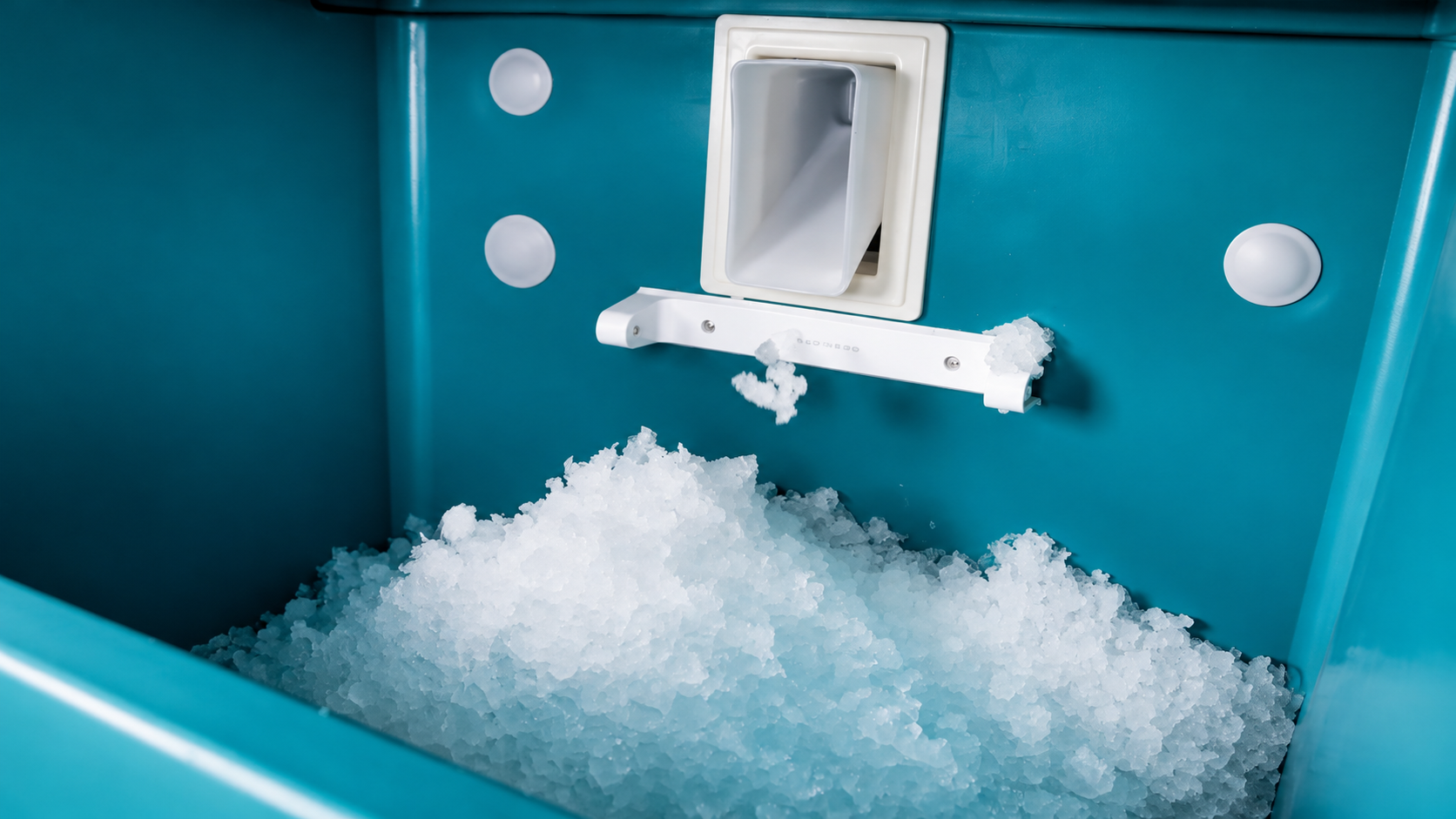
1. What Is a Commercial Granular Ice Machine?
A commercial granular ice machine is designed to produce small pieces of ice for applications that require flexible handling, rapid cooling, or easy mixing.
Depending on the equipment design, granular ice may resemble small irregular pieces, soft crushed ice, or compacted ice particles. Product terminology varies across manufacturers, so buyers should review the manufacturer’s specifications rather than relying on the product name alone.
Related terms used in the commercial ice equipment market include:
- Commercial granular ice machine
- Commercial granular ice maker
- Commercial nugget ice machine
- Commercial pebble ice maker
- Commercial flake ice machine
- Granular ice maker for commercial use
These terms are related, but they are not always interchangeable. Nugget or pebble ice is often associated with soft, chewable pieces used in beverages, while flake ice is commonly used for food presentation, seafood displays, and cooling applications. Granular ice may refer to different product forms depending on the machine.
Before comparing models, confirm the ice type that the equipment actually produces. Browse BORYVA’s commercial granular ice machine range to see current configurations.
2. What Is Granular Ice Used For?
The appropriate application depends on the machine’s output characteristics and the requirements of the business.
2.1 Beverage Preparation
Certain small-format ice types are suitable for chilled drinks, smoothies, blended beverages, and other beverage applications.
Buyers should consider how the ice texture affects blending, beverage consistency, serving speed, and the customer experience. If the ice will be dispensed directly into drinks, verify that the selected machine produces the intended ice shape and is compatible with the dispensing or storage arrangement.
For businesses that specifically need soft, chewable ice, a commercial nugget ice machine may be a more appropriate product category to investigate.
2.2 Restaurants, Cafés, and Bars
Restaurants and cafés may require ice for drinks, blended beverages, food preparation, and service stations.
The correct machine depends on the menu, the number of customers served during peak periods, and the available installation space.
A café with moderate beverage demand may need a different configuration from a high-volume restaurant or a multi-station foodservice operation.
2.3 Seafood and Fresh Food Displays
Some granular or flake-style ice products can be used for seafood displays, fresh food presentation, and product cooling.
However, buyers should not assume that every granular ice machine produces ice suitable for direct food display. The ice type, intended application, sanitation procedures, and applicable food-handling requirements must be verified before selecting equipment.
For seafood displays that require soft, moldable ice, a commercial flake ice machine may be the more relevant category.
2.4 Food Processing and Specialized Cooling
Food processors and other commercial operations may use small-format ice for process cooling or temperature management.
In these applications, selection should be based on the actual process requirements, including ice temperature, particle size, required cooling performance, handling method, and daily consumption.
The machine should be evaluated as part of the complete process rather than selected solely on its advertised production capacity.
3. Granular Ice vs. Nugget Ice vs. Flake Ice
Understanding the differences between ice types is one of the most important steps in selecting a commercial ice machine.
| Ice Type | Typical Characteristics | Common Applications |
|---|---|---|
| Granular ice | Small ice particles; exact texture depends on machine design | Specialized cooling and applications defined by the manufacturer |
| Nugget ice | Generally compacted, small pieces that are often soft and chewable | Beverage service, self-service drink stations, and selected foodservice applications |
| Pebble ice | Often used to describe small, rounded or nugget-style ice; definitions vary | Drinks, cafés, and beverage service |
| Flake ice | Thin, irregular flakes that can be spread and shaped around products | Seafood displays, fresh food presentation, and selected cooling applications |
| Cube ice | More defined solid pieces | Restaurants, bars, hotels, and general beverage service |
The table provides general guidance. Manufacturers may use different terminology for similar-looking products, so the actual ice produced should always be confirmed.
When requesting a quotation, ask the supplier to provide product photographs, sample specifications, and an explanation of the intended applications.
Choosing the wrong ice type can create problems even when the machine’s production capacity is sufficient.
4. How Much Ice Production Capacity Does Your Business Need?
Production capacity is one of the most important specifications when choosing a commercial granular ice maker.
Manufacturers may express production capacity in pounds per 24 hours or kilograms per 24 hours. These figures generally represent rated production under specified test conditions and should not automatically be treated as guaranteed output in every installation.
4.1 Estimate Daily Ice Consumption
Start by estimating how much ice your business uses during a typical operating day.
Consider:
- The number of drinks or products prepared daily.
- The amount of ice required for each serving or process.
- Demand during lunch, dinner, weekends, or seasonal peaks.
- Whether ice is used for more than one application.
- Whether additional ice is needed during deliveries, production runs, or special events.
For example, a beverage business with several service stations may experience higher peak demand than its daily average suggests.
Use actual operating data where available. If demand is uncertain, discuss expected usage and future growth with the equipment supplier before selecting a model.
4.2 Understand Rated Production vs. Actual Output
The actual production of a commercial ice machine can vary with operating conditions.
Factors may include:
- Incoming water temperature.
- Ambient air temperature.
- Available ventilation.
- Condenser performance.
- Water quality and maintenance condition.
- The machine’s operating configuration.
Compare production figures only when the measurement conditions are understood. A model with a higher published rating is not necessarily the best choice if it cannot operate effectively in the intended environment.
4.3 Allow for Future Business Growth
Businesses planning to expand should consider their expected demand over the equipment’s useful operating period.
A machine selected only for today’s minimum requirements may become insufficient if the business adds service stations, extends operating hours, or increases production volume.
At the same time, buying a substantially oversized unit without a clear demand requirement can increase initial investment and consume unnecessary space.
The goal is to match production capacity to realistic demand, including peak periods and reasonable growth expectations.
5. Why Ice Storage Capacity Matters
Ice production capacity and ice storage capacity are two different specifications.
Production capacity indicates how much ice the machine can make over a stated period. Storage capacity indicates how much ice can be held in the storage bin or container.
A machine may produce enough ice over 24 hours but still struggle to supply a business during a short period of high demand if its storage capacity is insufficient.
Before purchasing, consider:
- The amount of ice required during the busiest service period.
- Whether ice is consumed continuously or in concentrated bursts.
- The frequency of replenishment.
- Whether the machine includes an integrated storage bin or requires a separate solution.
- The compatibility of the machine and storage components.
If the equipment is used in a high-volume foodservice or beverage operation, ask the supplier to evaluate production and storage together.
Do not assume that a machine’s daily production rating represents the amount of ice immediately available for use.
6. Which Cooling System Should You Choose?
The condenser configuration affects installation requirements, heat rejection, and ongoing operating considerations.
Depending on the available product range, buyers may encounter air-cooled and water-cooled commercial ice machines.
6.1 Air-Cooled Ice Machines
Air-cooled equipment uses air to remove heat from the refrigeration system.
Potential advantages include avoiding a dedicated condenser cooling-water supply. However, the machine needs suitable airflow and adequate clearance around the condenser.
Before choosing an air-cooled granular ice machine, check:
- The installation area’s ambient temperature.
- Required ventilation clearance.
- Heat discharge into the surrounding space.
- Condenser accessibility for cleaning.
- Whether the equipment will be installed in a hot or enclosed environment.
Poor ventilation can affect operating performance, so installation requirements should be reviewed before delivery.
6.2 Water-Cooled Ice Machines
Water-cooled equipment uses water to remove heat from the refrigeration system.
This configuration may be appropriate for certain installations where air-cooled equipment faces environmental or ventilation limitations. However, it requires additional consideration of water supply, drainage, water consumption, and the site’s installation arrangements.
Before selecting a water-cooled model, confirm the manufacturer’s requirements and assess the long-term operating implications.
The best choice depends on the equipment design, site conditions, local requirements, and total cost of ownership.
7. Key Features to Evaluate in a Commercial Granular Ice Maker
When comparing commercial granular ice machine suppliers, evaluate the complete equipment specification rather than focusing on one component.
7.1 Refrigeration System and Compressor
Ask for information about the compressor, refrigeration circuit, cooling configuration, and availability of replacement parts.
The compressor brand alone does not determine the performance or reliability of the complete machine. Buyers should also consider the system design, rated operating conditions, serviceability, and documented product specifications.
7.2 Production Mechanism and Ice Consistency
Different ice machines use different mechanisms to produce their specific ice forms.
Confirm that the selected machine consistently produces the required particle size, texture, and output form for your intended application.
If ice appearance or texture is important to your process, request supporting product information before placing a bulk order.
7.3 Water Quality and Filtration
Water quality can influence equipment maintenance, scale accumulation, and ice quality.
Review the manufacturer’s water-quality requirements and determine whether water filtration or treatment is recommended for your installation.
The appropriate filtration arrangement depends on the incoming water and the equipment specification.
7.4 Controls and Monitoring
Depending on the model, buyers may evaluate electronic controls, operating indicators, alerts, and other monitoring features.
Confirm which functions are included in the quoted configuration. Do not assume that every commercial granular ice maker offers the same control features.
7.5 Cleaning and Sanitation Access
Commercial ice equipment requires appropriate cleaning and sanitation because ice may be consumed directly or come into contact with food and beverage equipment.
Before purchasing, review access to relevant components, the manufacturer’s cleaning instructions, and the availability of service support.
A clear maintenance procedure can help staff maintain the equipment and identify problems before they interrupt normal operations.
8. Installation Requirements Before Ordering
A suitable commercial ice machine must fit the installation site and connect correctly to the required services.
Before confirming an order, check the following.
Space and Service Clearance
Measure the available width, depth, and height. Include the manufacturer’s required ventilation and service clearances.
Also consider how the machine will be delivered, positioned, inspected, and maintained.
Water Supply
Confirm the required water connection, inlet conditions, and any water-treatment recommendations.
If water quality varies significantly by location, consult the supplier about suitable filtration and maintenance arrangements.
Drainage
Check the required drain connection and the available drainage route.
The installation must comply with the manufacturer’s instructions and applicable local plumbing requirements. Do not assume that a drain pump is included or that every site can use the same drainage configuration.
Electrical Requirements
Verify the required voltage, frequency, phase, current, and plug or wiring arrangement.
For international buyers, electrical specifications must match the destination market and installation conditions.
Ambient Conditions
Review the manufacturer’s permitted ambient temperature and ventilation requirements.
A machine installed in a hot kitchen or poorly ventilated enclosure may perform differently from one operating under its specified test conditions.
Confirm these details before shipment to reduce installation delays and unexpected modifications.
9. What Affects the Operating Cost of a Granular Ice Machine?
The purchase price is only one part of the total cost of ownership.
Commercial buyers should also evaluate electricity consumption, water use, filtration, cleaning, maintenance, spare parts, and installation costs.
Important factors include:
- Energy consumption: Compare documented energy-use information for the specific models and operating conditions.
- Water consumption: Check the manufacturer’s requirements, particularly for water-cooled configurations.
- Maintenance: Consider cleaning access, recommended maintenance intervals, and service requirements.
- Replacement parts: Confirm the availability and expected procurement process for commonly serviced components.
- Installation: Include plumbing, drainage, electrical work, and any required site preparation.
- Downtime: Consider how service support and parts availability may affect business operations.
A lower purchase price does not automatically mean a lower lifetime cost. Buyers should compare the complete specification and expected operating requirements before making a final decision.
10. How to Choose a Reliable Commercial Ice Machine Supplier
For distributors, importers, and commercial equipment buyers, supplier evaluation is just as important as machine selection.
Before placing an order, ask the supplier to confirm:
- The exact type of ice produced by the quoted model.
- Rated production capacity and the conditions under which it is measured.
- Storage compatibility and available configurations.
- Electrical, water, drainage, and installation requirements.
- Available technical documentation and applicable certifications.
- Warranty coverage and the procedure for making a claim.
- Spare-parts availability and technical support arrangements.
- Packaging specifications and shipping arrangements.
- Production lead time and quality inspection procedures.
For repeat orders, confirm that the agreed specifications will remain consistent across the supplied units. Any changes to components, materials, or packaging should be documented and approved before production.
Frequently Asked Questions
Is granular ice the same as nugget ice?
Not necessarily. Suppliers may use these names for different ice shapes and production methods. Ask for photographs or samples from the exact model, and confirm whether the ice texture suits your application.
How do I compare two machines with different daily production ratings?
Ask for the test conditions behind each rating, including ambient and inlet-water temperatures. Then compare the required output during your busiest period together with storage capacity and installation limits.
Do I need an air-cooled or water-cooled machine?
That depends on the model and site. An air-cooled unit needs adequate ventilation; a water-cooled unit needs a suitable water supply and drainage arrangement. Ask the supplier to confirm the requirements for the specific configuration being quoted.
Conclusion
A commercial granular ice machine should be selected around the ice it actually produces, realistic daily demand, peak-period storage, installation conditions, and service support. Compare exact model specifications rather than relying on a product label or a single capacity figure.
Explore BORYVA commercial granular ice machines and contact BORYVA with your application, required ice texture, daily output, destination market, and installation details to discuss a suitable configuration.