
Choosing a commercial glass door refrigerator is not only a question of capacity. For supermarkets, convenience stores, bars, restaurants and beverage distributors, the right model should keep products visible, maintain stable temperatures and match daily sales volume. This guide explains the key points to evaluate before selecting a commercial display refrigerator for your business.
1. Start with the Products You Need to Display
Begin by defining what will be stored and displayed. Bottled drinks, canned beverages, dairy products and pre-packaged food may require different temperature ranges, shelf layouts and display heights. A beverage-focused unit should provide clear product visibility and easy access during busy service periods, while a unit for chilled food should be selected according to the recommended storage temperature of the products.
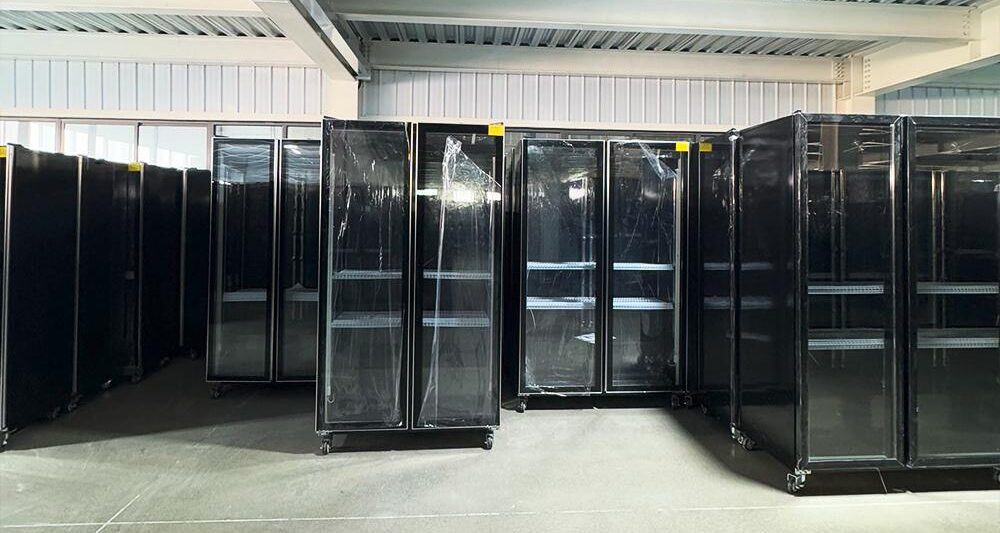
Also consider where the refrigerator will be used. Convenience stores and supermarkets normally need high capacity and reliable performance during frequent door opening, while bars and restaurants may prioritize footprint, door configuration and easy restocking. Selecting the application first helps prevent buying a cabinet that looks suitable but does not match daily operation.
2. Select the Right Capacity and Door Configuration
Capacity should be based on peak inventory rather than average daily stock. Consider how many bottles, cans or packaged products need to be displayed between restocking cycles, as well as the space required for different package sizes. A larger cabinet can reduce restocking frequency, but it should still fit the available sales area and allow proper airflow around the unit.
Door configuration also affects daily operation. A single-door model can suit a compact location or a limited product range. Two-door and three-door glass refrigerators are often more suitable for supermarkets, beverage stores and high-volume retail because they provide wider display space and allow staff to organize products by brand, size or temperature requirement. Choose a configuration that supports both product visibility and efficient restocking.
3. Check Temperature Range and Cooling Performance
The temperature range must match the products being stored. Many beverage display applications use a chilled range such as 2–8°C, but the correct setting depends on the product label, local food-safety requirements and the ambient temperature of the installation site. Always confirm the required storage conditions before choosing a model.
Do not assess cooling performance by temperature range alone. Ask whether the refrigerator uses forced-air cooling, how quickly it recovers after frequent door opening, and whether the refrigeration system is suitable for the local climate. Stable airflow helps maintain more even temperatures throughout the cabinet and supports a more consistent display.
4. Compare Glass Door Design, Lighting and Energy Use
Glass doors are central to product visibility, so evaluate how clearly customers can see the merchandise under normal store lighting. Features such as anti-fog glass, suitable door seals and interior LED lighting can improve presentation and help staff monitor stock. The final configuration should be selected according to the actual product range and display environment.
Energy use should also be considered over the full operating period. Compare insulation, door construction, lighting, refrigeration components and the expected frequency of door opening. A refrigerator that is correctly sized and installed with adequate ventilation is more likely to operate efficiently than an oversized or poorly placed unit.
5. Confirm Installation, Power Supply and After-Sales Requirements
Before placing an order, confirm the installation space, ventilation clearance, door-opening direction, local voltage, frequency and plug type. These details should be agreed before production so the refrigerator can be installed safely and operate as intended at its final destination.
For importers and distributors, it is also important to confirm product documentation, packaging requirements, spare-parts availability, warranty terms, minimum order quantity and lead time. A clear specification sheet and quotation help reduce misunderstandings and make it easier to compare suitable models.
Make a Practical Buying Decision
Choosing a commercial glass door refrigerator is a practical decision that should balance product type, capacity, cooling performance, installation requirements and after-sales support. By defining these requirements early, buyers can compare models more effectively and select a solution that supports both product presentation and daily operation.
BORYVA supplies commercial refrigeration equipment for distributors, importers and businesses. Explore our glass door merchandisers or contact our team with your capacity, temperature, voltage and installation requirements to discuss a suitable configuration.