
Choosing the right commercial thawing cabinet is important for restaurants, hotels, central kitchens, seafood processors, meat processing facilities, and commercial foodservice distributors. The right equipment can help organize frozen food preparation, manage thawing workflows, and support consistent food handling procedures.
However, not every thawing cabinet is suitable for every operation. Buyers need to compare usable capacity, temperature control, cleaning requirements, installation conditions, and the types of frozen products they handle.
Whether you need a commercial meat thawing cabinet for a professional kitchen or a seafood thawing cabinet for a food processing facility, this guide explains what to evaluate before purchasing. Explore the BORYVA thawing cabinet range for current product details.
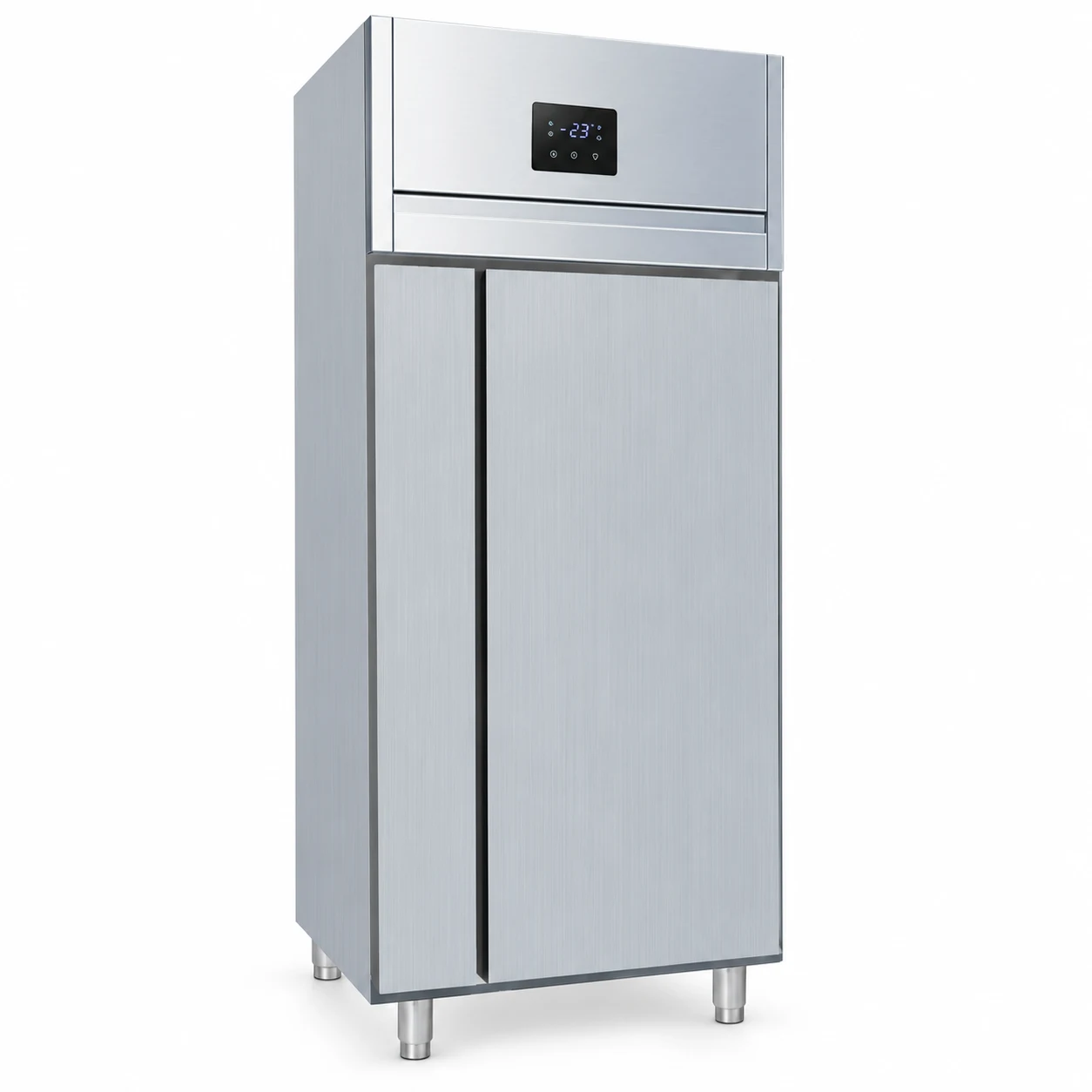
1. What Is a Commercial Thawing Cabinet?
A commercial thawing cabinet is specialized equipment designed to support controlled thawing of frozen ingredients in commercial kitchens and food processing environments.
Depending on its design, a commercial defrosting cabinet may use controlled air circulation, temperature management, or other specified thawing technologies. Some models are designed to provide refrigerated holding conditions after the thawing process.
Commercial thawing cabinets can be considered for applications involving frozen beef, poultry, fish, shrimp, and other ingredients that require thawing before cooking or further processing.
When comparing equipment, buyers should look beyond the product name. The operating temperature range, thawing method, usable capacity, loading arrangement, and cleaning design all affect whether a cabinet suits the intended application.
2. How to Choose the Right Thawing Cabinet Capacity
Capacity is one of the most important factors when choosing a commercial thawing cabinet for meat and seafood.
An undersized cabinet may create production bottlenecks, while an oversized unit may occupy unnecessary floor space and increase the initial investment.
2.1 Calculate Your Daily Thawing Requirements
Start by estimating how much frozen food your business needs to process during a normal shift and during peak production periods.
Consider the following questions:
- How many pounds or kilograms of frozen food must be thawed each day?
- How many batches need to be prepared per shift?
- What are the typical dimensions and weights of your products?
- How much preparation time is available before cooking or further processing?
- Will meat and seafood need to be handled in separate batches?
- Do you expect seasonal demand or future production growth?
A restaurant preparing ingredients for daily service may have very different requirements from a seafood processor handling several production batches.
Estimate peak workload rather than selecting equipment based only on average daily demand.
2.2 Compare Usable Capacity and Internal Dimensions
External cabinet dimensions do not tell the whole story. Buyers should compare usable capacity, internal dimensions, shelf configuration, and recommended batch loads.
For example, the BORYVA LL-289 commercial controlled thawing cabinet is listed in two capacity options:
- 372 L (13.1 cu. ft.)
- 744 L (26.3 cu. ft.)
The appropriate configuration depends on your food volume, available installation space, product dimensions, and daily workflow.
Before ordering, confirm the actual internal dimensions, recommended loading arrangement, shelf or rack configuration, and maximum recommended product load with the supplier.
2.3 Consider the Size and Type of Food
Frozen meat cuts, poultry portions, fish fillets, whole fish, and packaged seafood may require different loading arrangements.
Large products may need more clearance, while smaller packaged items may be easier to organize on multiple shelves.
When evaluating a meat and seafood thawing cabinet, confirm that the cabinet accommodates your actual product dimensions and packaging without blocking the designed airflow paths.
If different food categories are handled in the same facility, establish suitable separation and handling procedures to reduce cross-contamination risks.
3. Temperature Control: What Should Buyers Compare?
Temperature control is a critical consideration when selecting a commercial thawing cabinet. The equipment must support an appropriate thawing process for the food being handled.
Do not assume that every cabinet uses the same temperature range or that a wider range automatically means better performance.
3.1 Check the Operating Temperature Range
Request the manufacturer’s documented operating temperature range and confirm that it is suitable for your intended application.
The BORYVA LL-289 is specified with alternating warm-air and cold-air circulation and a refrigerated holding temperature range of 0°C to +3°C.
This specification describes the listed refrigerated holding range. Buyers should confirm the complete thawing cycle, control settings, operating procedure, and product-specific performance with the supplier rather than assuming the holding temperature represents every stage of thawing.
For U.S. foodservice operations, check the rules adopted in the relevant jurisdiction. The FDA’s 2026 Food Code, section 3-501.13(A), is a model code that describes thawing time/temperature control for safety food under refrigeration that maintains the food temperature at 5°C (41°F) or less. Operators should follow their local requirements and food safety plan, and verify the food temperature rather than relying only on the cabinet display.
3.2 Evaluate Digital Temperature Control
An intelligent digital temperature control system can help operators monitor and manage cabinet settings.
When comparing commercial defrosting cabinets, ask about:
- Temperature adjustment and display.
- The control method used during thawing.
- Temperature monitoring procedures.
- Temperature consistency under recommended loading conditions.
- Alarm or fault notification functions, if available.
- Available documentation of operating performance.
The LL-289 product page lists intelligent digital temperature control. Confirm the available settings, monitoring functions, and any additional control features for the selected configuration.
3.3 Understand the Thawing Method
The LL-289 uses an alternating warm-air and cold-air circulation design intended to support heat transfer during thawing, followed by refrigerated holding conditions.
When evaluating this type of commercial thawing equipment, ask the supplier to explain the recommended operating cycle, loading method, expected processing conditions, and limitations for different food products.
Thawing time can vary with product thickness, initial frozen temperature, packaging, batch size, and loading density. A general estimate should not be treated as a guaranteed processing time for every product.
Operators should verify food temperature using appropriate monitoring procedures and follow their facility’s food safety plan.
4. Cleaning and Maintenance: What Makes a Cabinet Easier to Maintain?
A commercial thawing cabinet used for meat and seafood needs a practical cleaning and maintenance routine.
Raw meat and seafood can release liquids during thawing. The cabinet’s interior design, removable components, and liquid management arrangements should support hygienic operation.
4.1 Check the Interior Construction
Look for durable, cleanable surfaces suitable for the intended commercial food environment.
The LL-289 product information describes rounded interior corners and an integrated interior structure intended to make routine cleaning easier.
Before purchasing, confirm the actual interior materials, cleaning instructions, and access to areas where residue or liquid may collect.
4.2 Inspect the Door Gasket
Door gaskets can collect residue and need regular inspection.
The LL-289 features a removable door gasket, which can help with cleaning and maintenance when handled according to the manufacturer’s instructions.
Ask whether replacement gaskets are available and how frequently the seal should be inspected under normal operating conditions.
4.3 Check Automatic Defrosting and Condensate Management
The LL-289 is listed with automatic defrosting and automatic condensate evaporation.
These features help manage frost and condensation generated during normal refrigeration operation. They do not eliminate the need for routine cleaning, inspection, and maintenance.
Ask the supplier to clarify the maintenance schedule, condensate management requirements, and any cleaning procedures associated with the refrigeration system.
4.4 Review Daily Cleaning Procedures
Before buying, confirm that staff can access the relevant surfaces and components conveniently.
Ask the supplier:
- Which components can be removed for cleaning?
- How should shelves and internal surfaces be cleaned?
- How should the door gasket be maintained?
- What cleaning products are permitted?
- What maintenance tasks should be performed regularly?
- Which replacement parts are available?
Follow the manufacturer’s cleaning instructions and the facility’s food safety procedures. Surfaces exposed to raw meat or seafood liquids should be cleaned and sanitized as required.
5. Installation Requirements: Measure Before You Order
A suitable thawing cabinet can become difficult to operate if the installation area has not been properly planned.
Before placing an order, review the cabinet dimensions, access route, electrical supply, ventilation requirements, and any drainage or liquid management needs.
5.1 Measure the Available Space
The LL-289 is listed in two external dimension configurations:
- 32.87 × 29.92 × 77.36 inches for the 372 L configuration.
- 63.98 × 29.92 × 77.36 inches for the 744 L configuration.
Use these listed dimensions as an initial reference, then confirm the final specification sheet for the exact model being ordered.
Allow sufficient space for door opening, loading and unloading, cleaning, ventilation, and servicing. Also check whether the cabinet can pass through doorways, corridors, and other access points during delivery.
5.2 Confirm Electrical Requirements
The product page lists power ratings of 1,000 W and 1,900 W for the two configurations.
However, the final voltage, frequency, current, plug type, and electrical connection requirements must be confirmed for the specific model and destination market.
For U.S. installations, verify compatibility with the site’s electrical supply before ordering. Do not assume that a unit supplied for another market can be connected without checking its electrical specifications.
5.3 Check Ventilation and Ambient Conditions
Review the manufacturer’s installation instructions for required clearance, ambient operating conditions, and restrictions on placement near heat sources.
Adequate clearance supports access for maintenance and helps the equipment operate under its intended conditions.
5.4 Plan Loading and Liquid Management
Consider where frozen products will be received, loaded, unloaded, and transferred to the next stage of food preparation.
Confirm the cabinet’s drainage or condensate management arrangement and whether the installation requires any additional connections.
Plan the surrounding workspace so staff can handle heavy containers safely and clean the area without obstruction.
6. Additional Features to Compare Before Purchasing
Beyond capacity, temperature control, cleaning, and installation, buyers should consider the following factors.
Air Circulation
Ask how the circulation system operates and whether the manufacturer provides guidance on loading density and product placement.
Insulation
The LL-289 product information describes high-density insulated cabinet construction. Confirm the construction details and any relevant performance documentation for the selected model.
Automatic Functions
Automatic defrosting and condensate evaporation can help simplify routine equipment management. Confirm the functions included in the standard configuration.
Service and Spare Parts
Ask about warranty coverage, replacement parts, technical support, and recommended preventive maintenance.
Total Cost of Ownership
Compare the purchase price alongside documented power consumption, installation costs, cleaning requirements, maintenance, and expected operating workload.
A cabinet with a lower purchase price may not be the best long-term choice if it does not meet your capacity or workflow requirements.
7. Commercial Thawing Cabinet Buying Checklist
Use this checklist when comparing suppliers and models.
| Evaluation Item | What to Confirm |
|---|---|
| Capacity | Usable volume and recommended batch load |
| Product dimensions | Fit for your meat and seafood products |
| Shelving | Configuration, adjustability, and loading limits |
| Temperature control | Operating range and documented control functions |
| Thawing method | Recommended cycle and product-specific instructions |
| Cleaning | Interior access, removable components, and gasket maintenance |
| Liquid management | Condensate handling and any drainage requirements |
| Installation | External dimensions, access route, and clearance |
| Electrical supply | Voltage, frequency, power, and connection requirements |
| Maintenance | Cleaning schedule, service access, and spare parts |
| Compliance | Applicable requirements and relevant documentation |
| Purchasing terms | Warranty, lead time, packaging, and delivery arrangements |
Request the specification sheet, installation manual, operating instructions, and a quotation for the exact configuration before making your final decision.
8. Is the BORYVA LL-289 Right for Your Operation?
The BORYVA LL-289 commercial controlled thawing cabinet is designed for professional food preparation and food processing workflows involving frozen ingredients.
Its listed features include:
- Two capacity options: 372 L and 744 L.
- Alternating warm-air and cold-air circulation.
- Intelligent digital temperature control.
- Refrigerated holding at 0°C to +3°C.
- Automatic defrosting and condensate evaporation.
- High-density insulated cabinet construction.
- Rounded interior corners and a removable door gasket.
These specifications make the LL-289 a model worth evaluating for businesses that need dedicated thawing equipment for meat, seafood, and other frozen ingredients.
Before ordering, confirm the selected capacity, complete thawing cycle, recommended loading arrangement, electrical configuration, installation requirements, and warranty terms.
View the product: BORYVA LL-289 Commercial Controlled Thawing Cabinet
If you are purchasing for a restaurant group, central kitchen, seafood processor, or foodservice equipment distribution business, provide your expected batch volume, product dimensions, destination market, and installation requirements when requesting a quotation.
Frequently Asked Questions
What is a commercial thawing cabinet used for?
A commercial thawing cabinet is designed to support controlled thawing workflows for frozen ingredients in professional kitchens and food processing environments. Suitability depends on the equipment design, food type, operating conditions, and applicable food safety procedures.
How do I choose the right capacity for a meat thawing cabinet?
Estimate your peak workload, number of batches, product dimensions, and preparation schedule. Then compare usable capacity and the manufacturer’s recommended batch load rather than relying on external dimensions alone.
What temperature does the BORYVA LL-289 maintain?
The product page lists a refrigerated holding temperature range of 0°C to +3°C. Confirm the complete thawing cycle and operating procedure with the supplier, because refrigerated holding conditions do not necessarily describe every stage of thawing.
Is the LL-289 suitable for seafood?
The product is listed for applications involving meat, seafood, and other frozen ingredients. Confirm that the model’s specifications and operating procedure are appropriate for the specific seafood products and food safety requirements of your facility.
How often should a commercial thawing cabinet be cleaned?
Follow the manufacturer’s instructions and your facility’s food safety plan. Cleaning frequency depends on usage, product handling, contamination risks, and the surfaces or components exposed to food liquids.
Does the LL-289 require a floor drain?
The product page lists automatic condensate evaporation, but the exact installation requirements should be confirmed with the supplier. Ask whether any additional drainage connection is needed for the selected configuration and installation environment.
What information should I provide when requesting a quotation?
Provide your intended application, expected daily thawing volume, typical product dimensions, preferred capacity, destination market, electrical supply, installation space, and any customization or documentation requirements.
Conclusion
Choosing the right commercial thawing cabinet for meat and seafood requires more than comparing price and external dimensions.
Start by estimating your production workload, then evaluate usable capacity, temperature control, cleaning access, liquid management, and installation requirements. Finally, confirm the exact specifications, electrical configuration, warranty, and service arrangements before placing an order.
For restaurants, central kitchens, seafood processors, and foodservice equipment distributors, a structured purchasing process can help identify equipment that fits the intended application and daily workflow.
Looking for a commercial thawing cabinet for your operation? Review the BORYVA LL-289 product specifications and contact our team to discuss your capacity, configuration, and purchasing requirements.