
Choosing between a single door and a double door beverage cooler is an important decision for convenience stores, supermarkets, restaurants, and beverage retailers. The right configuration depends on your available floor space, product assortment, expected sales volume, and merchandising goals.
A single door beverage cooler can be a practical choice for smaller retail spaces or focused beverage displays. A double door beverage cooler generally provides more display space for stores that need to merchandise a wider range of drinks.
However, door count alone does not determine which commercial beverage cooler is best for your business. Before purchasing, buyers should also compare cabinet dimensions, usable shelving space, temperature requirements, cooling performance, energy consumption, and maintenance needs.
This guide explains the key differences between single door and double door beverage display refrigerators to help retailers, distributors, and commercial equipment buyers make an informed decision.
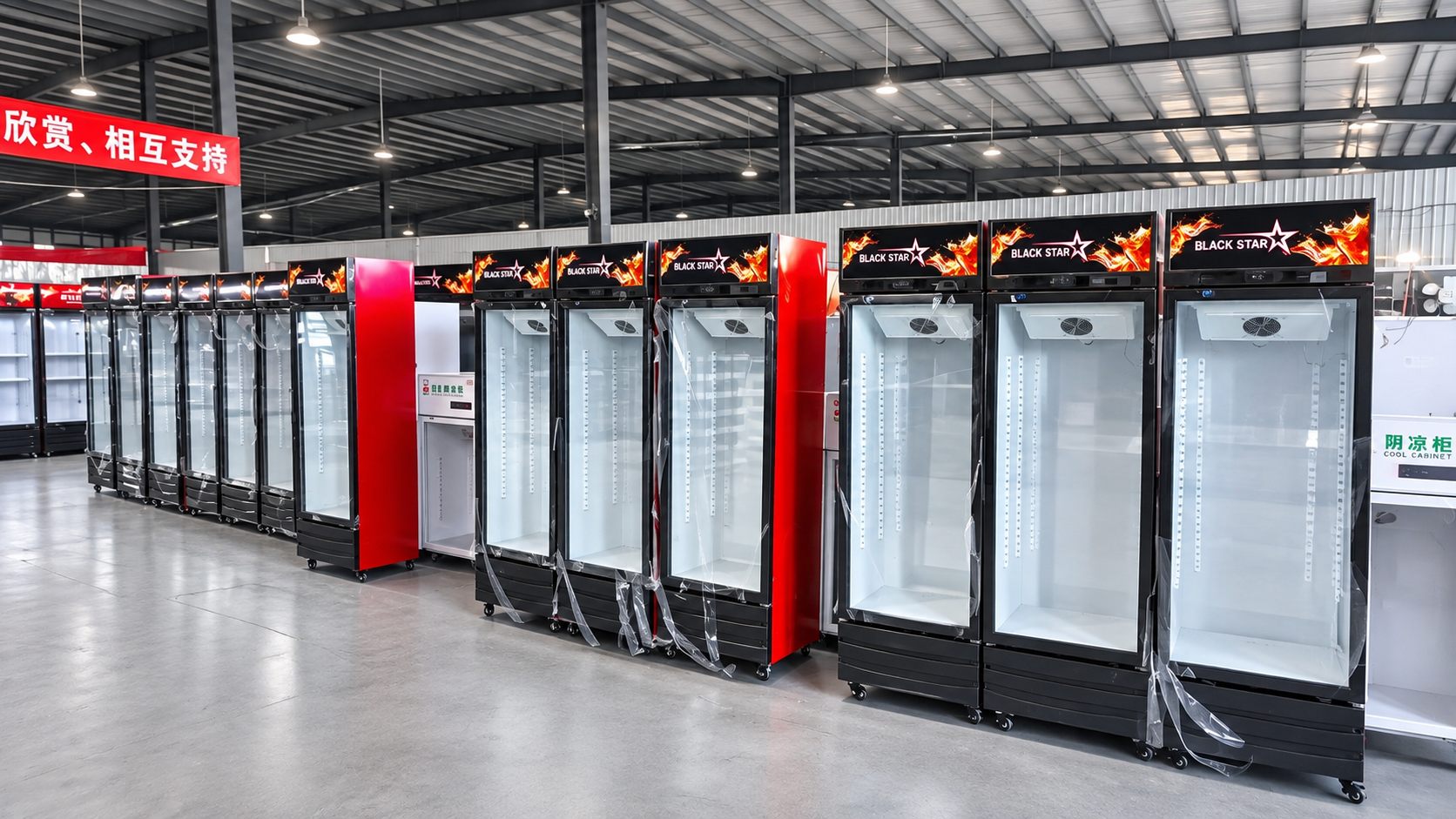
1. What Is a Single Door Beverage Cooler?
A single door beverage cooler is a commercial refrigeration unit with one access door, commonly used to display chilled beverages in convenience stores, cafés, small supermarkets, restaurants, and other retail environments.
A glass door beverage cooler allows customers to see the products inside without opening the door, helping retailers organize their beverage assortment and present products clearly.
Key Benefits of a Single Door Beverage Cooler
- Space-efficient configuration: A single door unit may fit more easily into locations with limited floor space.
- Focused product display: Suitable for presenting a selected range of bottled drinks, canned beverages, or other packaged products.
- Flexible placement: Can be considered for checkout areas, small retail outlets, cafés, and supplementary beverage displays.
- Convenient merchandising: Adjustable shelves, where available, help retailers arrange products according to their packaging and display requirements.
- Flexible purchasing options: Buyers can evaluate individual units or multiple units depending on store layout and equipment requirements.
A single door commercial beverage cooler is worth considering when floor space is limited or the business needs a dedicated display for a specific beverage category. Explore BORYVA’s single-door glass display refrigerators to compare available configurations.
2. What Is a Double Door Beverage Cooler?
A double door beverage cooler is a commercial refrigeration unit with two access doors. Compared with a single door configuration, it generally offers a larger display area, although actual capacity depends on cabinet dimensions, internal layout, and shelf configuration.
Double door beverage display refrigerators are commonly considered for convenience stores, supermarkets, beverage shops, and other businesses that need to present a broader assortment of chilled products.
Key Benefits of a Double Door Beverage Cooler
- Larger display area: Provides more room for organizing a wider selection of beverages.
- Broader product assortment: Can accommodate different beverage categories, subject to the cabinet’s actual dimensions and shelf layout.
- More merchandising flexibility: Retailers may allocate different shelves or sections to different brands and package sizes.
- Suitable for higher-volume retail environments: Can be a practical option for stores with greater display requirements.
- Improved display planning: Two-door configurations can help retailers organize products into distinct merchandising sections.
A double door beverage cooler may be a better fit when a store needs more display space and has sufficient room for a larger refrigeration cabinet. Explore BORYVA’s two-door glass display refrigerators to compare available configurations.
3. Single Door vs. Double Door Beverage Cooler: Key Differences
The following table provides a practical comparison for commercial buyers.
| Comparison Factor | Single Door Beverage Cooler | Double Door Beverage Cooler |
|---|---|---|
| Cabinet footprint | Generally more compact | Generally requires more floor space |
| Display capacity | Usually suited to a more focused assortment | Usually suited to a broader assortment |
| Product selection | Suitable for selected beverage categories | More flexibility for multiple beverage categories |
| Store applications | Small shops, cafés, supplementary displays | Larger convenience stores, supermarkets, beverage retailers |
| Placement flexibility | Often easier to fit into limited spaces | Requires more careful space planning |
| Initial purchase cost | Often lower, depending on specifications | Often higher, depending on specifications |
| Energy consumption | Depends on size, design, and efficiency | Depends on size, design, and efficiency |
| Maintenance | Depends on the refrigeration system and components | Depends on the refrigeration system and components |
These comparisons are general guidelines, not guarantees. Two models with the same door count can differ significantly in external dimensions, usable capacity, cooling performance, and operating costs.
Buyers should compare actual product specifications before making a final purchasing decision.
4. Which Beverage Cooler Is Better for a Convenience Store?
The best choice depends on the store’s floor plan, product range, and merchandising strategy.
Choose a Single Door Beverage Cooler If:
- Your store has limited space for refrigeration equipment.
- You want to create a dedicated display for a specific beverage category.
- Your current sales volume does not require a larger display cabinet.
- You need to add chilled beverage merchandising without substantially changing the store layout.
- You prefer to evaluate several compact units for different display locations.
For example, a small convenience store may use a single door beverage cooler for bottled water, soft drinks, or a selected range of energy drinks.
Choose a Double Door Beverage Cooler If:
- You need to display a wider assortment of beverages.
- Your store has sufficient space for a larger cabinet.
- You want to organize several beverage categories in one display area.
- Your merchandising plan requires more shelving and display flexibility.
- Your expected sales volume justifies the additional display capacity.
For example, a busy convenience store may consider a double-door glass beverage cooler for displaying water, soft drinks, juices, and other packaged beverages in one location.
The important point is to select equipment based on your actual display requirements rather than choosing a model solely because it has more doors.
5. What Should Buyers Check Before Purchasing?
Door configuration is only one part of the purchasing decision. Commercial buyers should evaluate the following specifications before selecting a beverage display refrigerator.
5.1 Cabinet Dimensions and Available Floor Space
Measure the installation area before comparing models. Consider cabinet width, depth, height, door opening clearance, ventilation requirements, and access for delivery and servicing.
A larger display cabinet is not necessarily a better investment if it restricts customer movement or reduces usable retail space.
5.2 Usable Capacity and Shelf Configuration
Do not compare models by door count alone. Ask suppliers for external dimensions, internal dimensions, usable storage capacity, shelf quantity, shelf adjustability, and the maximum recommended shelf load.
Consider the actual products you plan to display, including bottle height, can dimensions, packaging, and the amount of space needed between products.
5.3 Temperature Range and Cooling Performance
Confirm that the specified temperature range matches your intended beverage applications.
Buyers should review the manufacturer’s stated operating range, temperature control method, cooling system design, and performance under the intended ambient conditions.
For products that require specific storage conditions, verify the applicable requirements rather than assuming that every beverage cooler is suitable.
5.4 Compressor and Refrigeration System
Ask about the compressor brand and model, refrigeration system specifications, refrigerant, serviceability, and availability of replacement parts.
Energy consumption and cooling performance should be evaluated using comparable technical data rather than compressor brand alone.
5.5 Glass Doors, Lighting, and Merchandising Features
For retail environments, product visibility and ease of use can influence the shopping experience.
Depending on the model, buyers may consider:
- Clear glass doors for product visibility.
- LED interior lighting for beverage presentation.
- Adjustable shelving for different package sizes.
- Door frames and exterior finishes that match the store design.
- Removable door gaskets for cleaning and maintenance.
- Self-closing doors, where available.
- Locking options for specific retail applications.
- Castors with brakes, where included in the model specification.
Confirm which features are standard and which are optional before placing an order.
5.6 Energy Use and Total Cost of Ownership
A commercial beverage cooler operates over extended periods, so electricity consumption should be part of the purchasing decision.
Compare documented energy consumption, cabinet size, insulation, door design, operating conditions, and maintenance requirements.
A larger unit may provide more display space, but its total operating cost should be evaluated against the additional capacity it provides.
5.7 Warranty, Spare Parts, and After-Sales Support
For retailers, distributors, and importers, equipment support is an important part of supplier evaluation.
Before ordering, clarify the warranty coverage, compressor warranty, spare-parts availability, troubleshooting support, packaging method, shipping arrangements, and procedures for reporting transit damage.
Written warranty terms should be reviewed carefully because coverage may vary by component, model, market, and purchase agreement.
6. Should You Buy One Double Door Cooler or Two Single Door Coolers?
Some commercial buyers may also compare one double door unit with two single door units.
There is no universal answer. The better option depends on the installation space, total usable capacity, merchandising layout, operating requirements, and purchase price.
Consider these factors:
Display arrangement: Two single door units may offer more flexibility in separate display locations. One double door unit may create a more consolidated display area.
Installation space: Compare the combined width, depth, ventilation clearance, and door-opening space of both options.
Operational flexibility: Separate units may allow different placement or merchandising arrangements, but their suitability depends on the store’s layout and refrigeration requirements.
Total cost: Compare the purchase price, shipping, installation, electrical requirements, energy consumption, and maintenance costs of the complete setup.
Service requirements: Ask suppliers how maintenance and parts replacement would be handled for each configuration.
Request specifications and quotations for both options if you are equipping multiple retail locations or planning a larger installation.
7. Buying Beverage Coolers in Bulk: What Distributors and Importers Should Consider
For wholesalers, distributors, retail chains, and private-label buyers, choosing a suitable configuration is only the first step.
A commercial beverage cooler supplier should be able to provide clear specifications and explain the available configuration options.
Before placing a bulk order, consider the following:
- Product consistency: Confirm the specifications and approved configuration for each model.
- Market requirements: Verify the required voltage, frequency, plug type, refrigerant, and applicable certifications for the destination market.
- Brand customization: Ask about available options for door-frame colors, exterior graphics, illuminated signs, interior lighting, locks, and branded packaging.
- Order quantities: Confirm minimum order quantities, sample availability, and the pricing structure for different order volumes.
- Production lead time: Request a written production schedule and clarify when the delivery period begins.
- Quality control: Ask about inspection procedures, packaging standards, and documentation supplied with the shipment.
- After-sales support: Confirm spare-parts arrangements, warranty terms, and technical support procedures.
For private-label projects, finalize the product specifications, artwork, electrical requirements, packaging, and approval process before production begins.
A clear specification sheet can help reduce misunderstandings and improve consistency across repeat orders.
8. How to Choose the Right Beverage Cooler for Your Business
Use this checklist to narrow down your options before requesting a quotation.
- Measure the available installation area.
- Estimate the number and types of beverages you need to display.
- Compare single door and double door cabinet dimensions.
- Confirm the required temperature range and intended application.
- Review shelf configuration and usable capacity.
- Compare refrigeration specifications and documented energy consumption.
- Identify required features and optional customization.
- Confirm electrical requirements for the destination market.
- Review warranty terms, spare-parts support, and delivery arrangements.
- Request a detailed quotation based on your selected configuration.
By evaluating these factors together, buyers can choose a commercial beverage display refrigerator that fits their retail environment, product assortment, and purchasing objectives.
Frequently Asked Questions
Is a single door or double door beverage cooler better for a small store?
A single door model is often a practical starting point for a small store with limited floor space or a focused beverage assortment. However, the final choice should depend on the actual cabinet dimensions and required display capacity.
Does a double door beverage cooler always use more electricity?
Not necessarily in every operating situation, but a larger unit may have higher total energy consumption. Compare documented energy data for the specific models under comparable conditions.
What is the difference between a beverage cooler and a commercial refrigerator?
A beverage cooler is generally designed for displaying chilled drinks, often through glass doors. A commercial refrigerator is a broader category that includes equipment designed for different storage and foodservice applications. The correct choice depends on the intended use and required temperature conditions.
How many shelves should a commercial beverage cooler have?
The appropriate shelf configuration depends on the cabinet dimensions, product packaging, and merchandising plan. Buyers should confirm the included shelf quantity, adjustability, load rating, and available accessories for each model.
Can beverage coolers be customized for a private label?
Depending on the manufacturer’s capabilities and the selected model, customization may include exterior graphics, door-frame colors, illuminated signs, interior lighting, locks, and branded packaging. Buyers should confirm feasibility, minimum order quantities, and lead times with the supplier.
What information should I provide when requesting a beverage cooler quotation?
Provide the preferred door configuration, approximate dimensions, intended application, required temperature range, destination market, voltage and frequency, estimated order quantity, and any branding or packaging requirements. Reference images can also help clarify your expectations.
Conclusion
Choosing between a single door and double door beverage cooler comes down to space, display capacity, product assortment, operating requirements, and budget.
A single door commercial beverage cooler may suit smaller stores and focused displays, while a double door beverage cooler may be more appropriate for businesses that need a broader beverage assortment in one location.
For distributors, importers, and retail chains, it is also important to evaluate product consistency, customization options, warranty terms, and supplier support before placing an order.
BORYVA supplies commercial refrigeration equipment for business buyers. If you are comparing beverage cooler configurations for your store, distribution business, or private-label project, contact our team to discuss your requirements and request product specifications.
Request a Quote to discuss your preferred configuration, quantity, and customization requirements.