
Choosing the right commercial reach-in freezer is an important decision for restaurants, hotels, catering businesses, and other foodservice operations.
A reliable commercial freezer helps businesses store frozen ingredients, organize inventory, and maintain the storage conditions required for different food products.
However, not all upright freezer models are the same. Buyers need to consider storage capacity, door configuration, temperature control, insulation, compressor performance, cabinet dimensions, and daily operating requirements.
Whether you are purchasing a single-door freezer for a small restaurant or a three-door upright freezer for a high-volume commercial kitchen, selecting the right model can help improve storage organization and support efficient kitchen operations.
In this guide, we explain how to choose a commercial reach-in freezer, compare different configurations, and identify the key features buyers should evaluate before purchasing. For a broader upright equipment overview, see BORYVA’s Commercial Reach-In Refrigerators and Freezers Buying Guide.
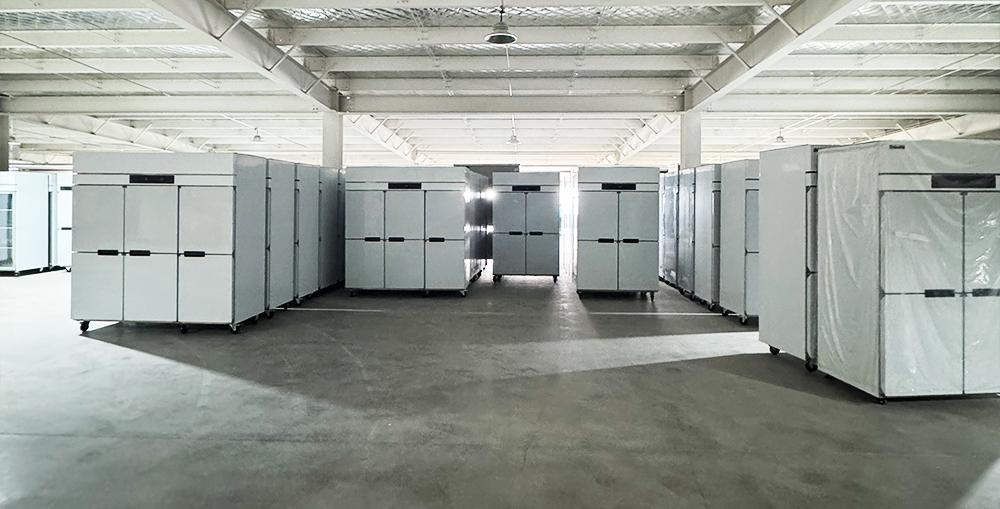
1. What Is a Commercial Reach-In Freezer?
A commercial reach-in freezer is an upright refrigeration unit designed for frozen food storage. It typically features front-opening doors that allow employees to access frozen products directly without entering a storage room.
Compared with walk-in freezers, reach-in freezers offer a more compact storage solution for kitchens and foodservice facilities that need convenient access to frozen inventory. Browse BORYVA’s commercial reach-in collection for related configurations.
Common Applications
Commercial reach-in freezers are widely used in:
- – Restaurants and commercial kitchens
- – Hotels and catering facilities
- – Bakeries and food preparation areas
- – Cafeterias and institutional kitchens
- – Supermarkets and grocery stores
- – Foodservice distribution facilities
Common Products Stored
Depending on the equipment specifications and required storage conditions, commercial freezers may be used for:
- – Frozen meat and poultry
- – Frozen seafood
- – Frozen vegetables
- – Ice cream
- – Frozen prepared meals
- – Frozen ingredients
- – Other products requiring frozen storage
When selecting a commercial upright freezer, buyers should consider the type of products being stored, the required temperature range, and the expected inventory volume.
2. Choose the Right Door Configuration
Commercial reach-in freezers are available in different door configurations to accommodate different storage requirements.
The most common options include single-door, two-door, and three-door models. See the BORYVA Reach-In Freezers category for current freezer configurations. For a door-count comparison, read 1 Door vs. 2 Door vs. 3 Door Commercial Refrigerators.
1 Door Commercial Freezer
A single-door commercial freezer is generally suitable for businesses with relatively modest frozen storage requirements or limited installation space.
Common applications include:
- – Small restaurants
- – Coffee shops with frozen inventory
- – Compact commercial kitchens
- – Supplementary frozen storage areas
- – Small food preparation facilities
Before choosing a single-door model, check its internal storage volume, external dimensions, shelf arrangement, and door clearance. Review the verified 1 Door Commercial Reach-In Freezer product page for a current example.
2 Door Commercial Freezer
A two-door commercial freezer provides a larger cabinet configuration and may be suitable for restaurants and foodservice businesses with greater frozen inventory requirements. Review the verified 2 Door Commercial Reach-In Freezer product page for a current example.
Potential advantages include:
- – More storage options.
- – Flexible organization of different frozen products.
- – Convenient access to separate cabinet sections, depending on the design.
- – Suitability for medium-sized and growing kitchen operations.
3 Door Commercial Freezer
A three-door commercial freezer is designed for operations that need a larger storage configuration. Review the verified 3 Door Commercial Reach-In Freezer product page for a current example.
It may be suitable for:
- – Large restaurants
- – Hotel kitchens
- – Catering businesses
- – High-volume foodservice operations
- – Commercial food preparation facilities
A three-door model can provide additional storage and more flexible inventory organization, but it also requires sufficient floor space and suitable installation access.
How Do You Choose?
Consider the following questions:
- 1. How much frozen inventory do you normally store?
- 2. How frequently do employees access the freezer?
- 3. How much floor space is available?
- 4. Do you need separate storage sections for different products?
- 5. Will your business require additional storage capacity in the future?
Do not assume that a three-door freezer has three times the capacity of a single-door model. Actual storage volume depends on cabinet dimensions and internal construction.
3. Solid Door vs. Glass Door Commercial Freezers
Another important decision is choosing between solid door and glass door commercial freezers.
Both configurations are available for different foodservice and retail applications.
Solid Door Commercial Freezer
Solid door commercial freezers are commonly used for back-of-house frozen food storage.
Potential advantages include:
- – Insulated door construction.
- – Concealed frozen food storage.
- – Practical surfaces for routine cleaning.
- – Suitability for restaurant kitchens and food storage areas.
Solid door models are often a practical choice when frozen storage functionality is the main priority.
Glass Door Commercial Freezer
Glass door commercial freezers allow users to see the stored products without opening the cabinet.
Potential advantages include:
- – Improved product visibility.
- – Easier visual inventory checks.
- – Interior LED lighting on applicable models.
- – Suitability for display-oriented applications.
Glass door freezers may be useful in supermarkets, convenience stores, and other retail environments where customers or employees need to see the available products.
Which One Should You Choose?
Choose a solid door freezer when concealed storage and back-of-house operation are your main priorities.
Consider a glass door freezer when product visibility and display are important.
When comparing the two, evaluate glass construction, insulation, door sealing, condensation management, lighting, and actual energy consumption. For a broader solid-door versus glass-door comparison, read Solid Door vs. Glass Door Commercial Refrigerators.
4. How Much Storage Capacity Do You Need?
Choosing the correct commercial freezer capacity is essential for efficient inventory management.
A freezer that is too small may lead to overcrowded shelves and poor organization. A freezer that is unnecessarily large may take up valuable kitchen space.
Before purchasing, consider the following factors.
Daily Frozen Inventory
Estimate the amount of frozen inventory your business normally stores.
Consider:
- – Frozen meat and poultry.
- – Seafood.
- – Frozen vegetables.
- – Ice cream and desserts.
- – Frozen prepared food.
- – Other frozen ingredients.
Your purchasing frequency and inventory turnover will also influence the amount of storage space required.
Internal Storage Volume
Do not compare freezers using external dimensions alone.
Check the actual internal storage volume and consider how much usable space is available after accounting for shelves and internal components.
Shelf Configuration
Adjustable shelving can make a commercial freezer more flexible.
Check:
- – Number of shelves included.
- – Shelf dimensions.
- – Shelf load capacity.
- – Available adjustment positions.
- – Compatibility with your food containers.
Future Storage Requirements
If your restaurant expects to expand its operations or increase its inventory, consider whether additional freezer capacity will be needed.
However, avoid purchasing oversized equipment without a clear operational reason.
5. Temperature Control and Freezing Performance
Temperature control is one of the most important considerations when choosing a commercial reach-in freezer.
Different frozen products have specific storage requirements, so buyers should select equipment according to the intended application and applicable food safety standards.
Check the Operating Temperature Range
Before purchasing, confirm the manufacturer’s specified operating temperature range.
Consider:
- – Minimum and maximum temperature settings.
- – Temperature stability.
- – Temperature recovery after door openings.
- – Suitability for the intended frozen products.
- – Performance under the expected operating environment.
Digital Temperature Controller
A digital temperature controller allows users to adjust and monitor the freezer’s operating settings.
When evaluating this feature, check:
- – Temperature display.
- – Adjustment functions.
- – Control accuracy.
- – Alarm functions, if available.
- – Ease of operation.
Air Circulation and Cooling Distribution
Air circulation helps distribute cold air throughout the storage compartment.
Buyers should consider the cooling system design and whether the equipment provides suitable temperature distribution for its intended loading conditions.
Avoid overloading shelves or blocking airflow inside the cabinet.
Door Opening Frequency
These units may be opened frequently during busy kitchen operations.
Effective door sealing and suitable refrigeration system design are important for helping maintain the required storage conditions.
6. Why Insulation and Door Sealing Matter
Insulation and door sealing are important parts of freezer construction.
Because freezers operate at lower temperatures than refrigerators, limiting heat transfer is particularly important.
Cabinet Insulation
The cabinet insulation helps reduce heat entering the freezer from the surrounding environment.
When comparing models, check:
- – Insulation material.
- – Cabinet construction.
- – Insulation thickness, where specified.
- – Door insulation.
- – Overall cabinet design.
Door Gaskets
Door gaskets help create a seal between the door and cabinet.
A damaged or poorly fitted gasket may allow warm air to enter the storage compartment.
Consider:
- – Gasket sealing design.
- – Ease of cleaning.
- – Replaceability.
- – Availability of replacement parts.
Door Closing Design
Self-closing doors can help reduce the time a freezer remains open during busy kitchen operations.
However, buyers should confirm the actual door-closing configuration and operating characteristics of each model.
7. Compressor, Refrigerant and Energy Efficiency
The refrigeration system plays a central role in freezer performance. For refrigerator-versus-freezer fundamentals, see Commercial Refrigerator vs. Commercial Freezer.
When selecting a commercial upright freezer, buyers should evaluate the compressor, refrigerant, insulation, and other components as part of the complete system.
Compressor Performance
The compressor is responsible for driving the refrigeration cycle.
Consider:
- – Compressor brand and specifications.
- – Compatibility with the refrigeration system.
- – Service availability.
- – Manufacturer technical support.
Do not select a freezer based only on the compressor brand. Overall equipment performance depends on the complete refrigeration system.
Refrigerant Selection
Freezer models can use different refrigerants.
Some equipment models use R290 refrigerant.
Before purchasing, confirm:
- – Actual refrigerant type.
- – Applicable local regulations.
- – Equipment safety requirements.
- – Installation requirements.
- – Availability of qualified service technicians.
R290 is a flammable refrigerant. Equipment designed for R290 must be installed and serviced according to the manufacturer’s instructions and applicable safety requirements.
Energy Efficiency
Energy consumption matters because these units operate regularly.
Factors affecting energy use include:
- – Compressor performance.
- – Cabinet insulation.
- – Door sealing.
- – Defrost system.
- – Fan operation.
- – Ambient temperature.
- – Door opening frequency.
Request verified energy consumption information where available.
Do not assume that all freezer models have the same operating costs.
8. Stainless Steel Construction and Other Important Features
Stainless steel is widely used in commercial kitchen refrigeration equipment because it is practical for routine cleaning and suitable for demanding foodservice environments.
When evaluating a stainless steel freezer, pay attention to the following features.
Stainless Steel Cabinet
Confirm the actual material grade and which cabinet components use stainless steel.
Do not assume that every stainless steel-looking surface has the same material specification.
Adjustable Shelves
Adjustable shelves allow businesses to organize frozen products according to different package sizes and storage requirements.
Removable Door Gaskets
Removable gaskets can make routine cleaning and replacement more convenient.
Casters with Locking Brakes
Casters can help employees move the equipment during cleaning and maintenance.
Locking brakes help secure the freezer in its operating position.
Digital Controls
Electronic temperature controls make it easier to adjust and monitor operating settings.
Defrost System
Defrost arrangements vary by model.
Confirm the defrost design, maintenance requirements, and suitability for the intended application.
9. Installation and Maintenance Considerations
Before purchasing a commercial reach-in freezer, make sure the equipment can be installed properly in the intended location.
Installation Space
Measure:
- – Cabinet width.
- – Cabinet depth.
- – Cabinet height.
- – Door opening clearance.
- – Delivery access.
- – Required ventilation clearance.
Follow the manufacturer’s installation instructions for ventilation and spacing requirements.
Electrical Requirements
Confirm:
- – Rated voltage.
- – Frequency.
- – Current or power requirements.
- – Plug configuration.
- – Compatibility with the installation location.
Never assume that every model uses the same electrical specifications.
Routine Maintenance
Regular maintenance helps support reliable freezer operation.
Recommended considerations include:
- 1. Clean the interior and exterior regularly.
- 2. Inspect door gaskets for damage.
- 3. Keep condenser components clean according to manufacturer instructions.
- 4. Avoid blocking internal air circulation.
- 5. Monitor operating temperatures.
- 6. Follow the manufacturer’s defrost and maintenance procedures.
- 7. Arrange professional service if abnormal operation occurs.
10. How to Choose a Reliable Commercial Freezer Manufacturer
For distributors, wholesalers, importers, and private-label buyers, choosing a reliable commercial freezer manufacturer is an important part of the sourcing process.
Before placing an order, evaluate the following factors.
Product Range
Check whether the manufacturer offers:
- – Single-door commercial freezers.
- – Two-door commercial freezers.
- – Three-door commercial freezers.
- – Solid door models.
- – Glass door models.
- – Different cabinet dimensions and configurations.
Manufacturing and Quality Inspection
Ask about:
- – Production inspection procedures.
- – Refrigeration system testing.
- – Electrical component checks.
- – Pre-shipment inspection.
- – Product specification documentation.
OEM and ODM Customization
Depending on the manufacturer’s capabilities, customization may include:
- – Brand logos and product labels.
- – Cabinet appearance.
- – Door configurations.
- – Shelf arrangements.
- – Voltage and plug specifications.
- – Customized packaging.
- – User manuals and product documentation.
Warranty and After-Sales Support
Confirm:
- – Product warranty terms.
- – Compressor warranty.
- – Spare parts availability.
- – Technical support.
- – Troubleshooting assistance.
- – Packaging and shipping arrangements.
A suitable manufacturer should provide accurate technical information and clear communication throughout the purchasing process.
Conclusion: Choose the Right Commercial Reach-In Freezer
Choosing the right commercial reach-in freezer requires more than comparing the number of doors or the external appearance.
Businesses should evaluate storage capacity, temperature requirements, cabinet dimensions, door construction, insulation, compressor specifications, energy consumption, and installation conditions.
A single-door freezer may be suitable for a compact restaurant, while two-door and three-door configurations may better support larger foodservice operations.
Solid door models are commonly selected for back-of-house frozen storage, while glass door models can be useful when product visibility is important.
For distributors, importers, and commercial kitchen equipment buyers, a supplier with multiple freezer configurations can make sourcing and customization more flexible.
BORYVA supports business buyers comparing freezer configurations, with OEM/ODM options available according to product requirements.
Looking for a commercial reach-in freezer for your business?
Contact BORYVA to discuss your storage requirements, explore available configurations, and request a quotation.
Frequently Asked Questions
1. What is a commercial reach-in freezer?
A commercial reach-in freezer is an upright freezer with front-opening doors designed for convenient access to frozen food and ingredients in restaurants, hotels, and other commercial facilities.
2. What is the difference between a reach-in freezer and a walk-in freezer?
A reach-in freezer is a self-contained upright cabinet, while a walk-in freezer is a larger insulated room that employees can enter to access stored products.
3. Should I choose a one-door, two-door, or three-door commercial freezer?
The choice depends on your frozen inventory, available kitchen space, storage organization, and daily usage. Compare actual internal capacity and cabinet dimensions rather than relying only on door count.
4. What temperature should a commercial reach-in freezer maintain?
The required operating temperature depends on the food products and applicable food safety requirements. Always check the manufacturer’s specified operating range.
5. Are solid door commercial freezers better than glass door models?
Solid door models are commonly used for back-of-house frozen storage. Glass door models are useful when product visibility is important. The best option depends on the intended application.
6. Are stainless steel commercial freezers easy to clean?
Stainless steel surfaces are generally practical for routine cleaning. Always follow the manufacturer’s cleaning instructions and confirm the actual material specifications.
7. What should I look for in a commercial freezer compressor?
Check the compressor specifications, compatibility with the refrigeration system, service availability, and manufacturer support. Overall system performance matters more than the compressor brand alone.
8. How often should a commercial freezer be maintained?
Maintenance frequency depends on the equipment design and operating conditions. Follow the manufacturer’s recommended inspection, cleaning, and servicing schedule.
9. Can I customize a commercial reach-in freezer with my brand?
Depending on the manufacturer, OEM/ODM options may include logos, cabinet appearance, shelving, electrical specifications, and packaging. Confirm the available options and minimum order quantity before ordering.
10. How do I choose a reliable commercial freezer supplier?
Compare the supplier’s product range, technical specifications, manufacturing capabilities, inspection procedures, warranty terms, spare parts availability, and after-sales support.