
Choosing the right commercial refrigerator is an important decision for restaurants, hotels, supermarkets, and other foodservice businesses.
One of the first questions buyers face is whether to choose a 1 door, 2 door, or 3 door commercial refrigerator.
A single-door model may be suitable for a smaller kitchen or supplementary storage area, while a two-door or three-door refrigerator may better support businesses with larger inventory requirements and more demanding food preparation operations.
However, the number of doors alone does not determine the best refrigerator for your business. Available storage capacity, cabinet dimensions, internal shelving, kitchen layout, and daily operating requirements should all be considered.
In this guide, we compare single-door, double-door, and triple-door commercial refrigerators and explain how to choose the right configuration for your commercial kitchen. For a broader overview, see BORYVA’s Commercial Reach-In Refrigerators and Freezers Buying Guide.
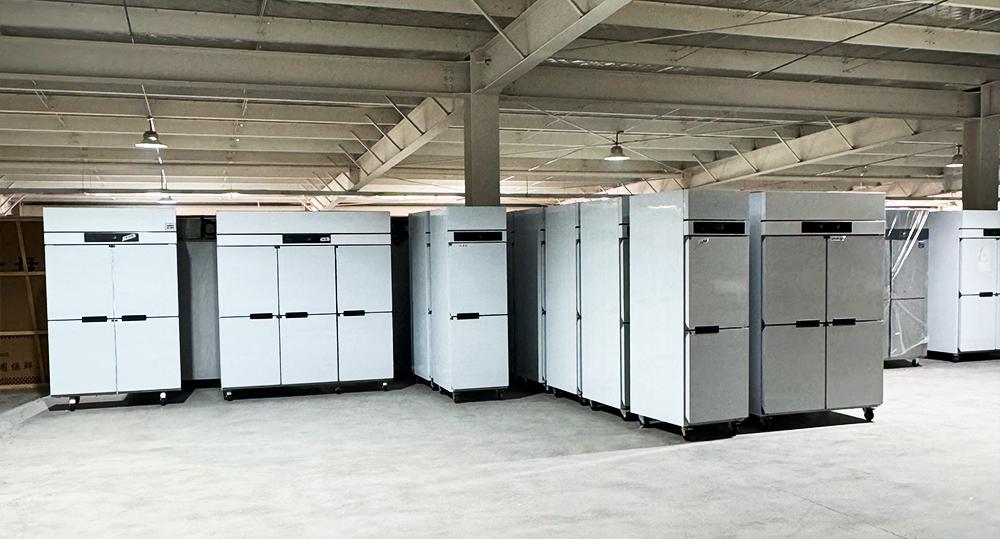
1. Understanding Commercial Refrigerator Door Configurations
Commercial reach-in refrigerators are available in different cabinet configurations to accommodate different storage requirements. The most common options include 1 door, 2 door, and 3 door models. BORYVA’s commercial reach-in collection provides the broader product range for comparison.
- 1 Door Commercial Refrigerator
- 2 Door Commercial Refrigerator
- 3 Door Commercial Refrigerator
These models are commonly used in restaurants, hotels, catering facilities, bakeries, and commercial kitchens. Depending on the manufacturer and product series, they may be available with solid doors or glass doors. Some product ranges also offer matching commercial freezer configurations.
When comparing models, remember that the number of doors is only one part of the cabinet design. Buyers should also check the number of storage sections, usable internal volume, external dimensions, and shelf arrangement.
2. 1 Door Commercial Refrigerator: Best for Compact Storage Needs
A 1 door commercial refrigerator is an upright refrigeration unit with a single front-opening door. It is commonly considered by businesses that need convenient refrigerated storage but have limited floor space or relatively modest inventory requirements. Review the existing 1 door commercial reach-in refrigerator page for a real product reference.
Key Advantages
Space-Saving Configuration
A single-door refrigerator can be suitable for smaller kitchens and areas where installation space is limited.
Convenient Access
The single-door design provides direct access to the internal storage compartment.
Flexible Placement
Depending on its dimensions and ventilation requirements, a single-door unit may fit into different commercial kitchen layouts.
Suitable for Supplementary Storage
Businesses with larger refrigeration systems may also use a single-door model as an additional storage unit near a specific preparation area.
Common Applications
- Small restaurants
- Coffee shops
- Bakeries
- Compact commercial kitchens
- Catering preparation areas
- Supplementary ingredient storage
What Should You Consider?
Before purchasing a single-door unit, check available internal storage volume, external cabinet dimensions, number and arrangement of shelves, door opening clearance, expected daily inventory, and whether the unit will serve as primary or supplementary storage.
A single-door refrigerator is not automatically the best option for every small business. The actual storage requirements and cabinet dimensions should determine the final choice.
3. 2 Door Commercial Refrigerator: A Flexible Option for Growing Kitchens
A 2 door commercial refrigerator provides a larger cabinet configuration with two access doors. It is commonly considered by restaurants and foodservice businesses that require more storage than a single-door unit can provide. See the existing 2 door commercial reach-in refrigerator page for a verified product example.
Key Advantages
More Storage Options
Two-door configurations can offer greater overall storage volume, depending on the model’s dimensions and internal design.
Better Organization
Different shelves or sections can help employees organize ingredients, prepared food, and other refrigerated products.
Flexible Kitchen Applications
Two-door refrigerators can support a range of restaurant and commercial food preparation operations.
Suitable for Higher Inventory Requirements
Businesses with larger ingredient inventories may benefit from the additional storage space.
Common Applications
- Medium-sized restaurants
- Hotel kitchens
- Catering facilities
- Commercial bakeries
- Food preparation areas
- Institutional kitchens
What Should You Consider?
When selecting a two-door unit, compare total usable storage capacity, cabinet width and depth, internal shelf layout, door opening direction, access space around the unit, and refrigeration system specifications. A two-door model can provide additional storage, but buyers should ensure the equipment fits the kitchen’s available floor space and workflow.
4. 3 Door Commercial Refrigerator: For Larger Storage Requirements
A 3 door commercial refrigerator is designed for operations that need a larger refrigeration cabinet and more storage organization. It is often considered by high-volume restaurants, hotels, catering businesses, and other commercial foodservice operations. Review the existing 3 door commercial reach-in refrigerator page for a verified product example.
Key Advantages
Larger Storage Configuration
Three-door models generally provide more storage space than smaller configurations within a comparable product series.
Flexible Ingredient Organization
Multiple access sections can help organize different food categories and storage requirements.
Suitable for High-Volume Operations
Larger kitchens may benefit from additional storage capacity for frequently used ingredients and prepared food.
Multiple Access Points
Separate doors can provide access to different sections of the cabinet without opening the entire storage area.
Common Applications
- Large restaurants
- Hotel kitchens
- Catering operations
- Commercial food preparation facilities
- Institutional foodservice kitchens
- High-volume foodservice businesses
What Should You Consider?
Before selecting a three-door unit, evaluate total storage requirements, available installation space, cabinet dimensions, internal organization, door opening clearance, electrical and ventilation requirements, and delivery and installation access.
A three-door model may offer more storage, but it also requires sufficient floor space and suitable installation conditions.
5. 1 Door vs. 2 Door vs. 3 Door Commercial Refrigerator: Comparison
The following comparison provides a general overview of the three configurations.
| Comparison Factor | 1 Door | 2 Door | 3 Door |
|---|---|---|---|
| Cabinet configuration | Single access door | Two access doors | Three access doors |
| Storage requirements | Smaller storage needs | Medium to larger storage needs | Larger storage needs |
| Kitchen space | More compact options | Requires more floor space | Generally requires more floor space |
| Inventory organization | Single main access section | More flexible access arrangement | Multiple access sections |
| Typical application | Small kitchens and supplementary storage | Restaurants and growing kitchens | Larger foodservice operations |
| Purchasing priority | Space and essential storage | Storage and workflow balance | Higher storage requirements |
The actual capacity and external dimensions vary by manufacturer and model. A three-door refrigerator is not necessarily three times the capacity of a single-door model. Cabinet design, section dimensions, insulation thickness, and usable internal space all affect the final storage volume.
6. How to Choose the Right Storage Capacity
Storage capacity is one of the most important factors when choosing this equipment. Selecting a unit that is too small may lead to overcrowded shelves and inefficient food organization, while an unnecessarily large model may take up valuable kitchen space and increase equipment costs.
Daily Inventory Requirements
Estimate how much refrigerated inventory your business normally stores. Consider fresh vegetables and fruits, meat and seafood, dairy products, prepared ingredients, packaged food, beverages, and other refrigerated products. Your purchasing frequency and inventory turnover also affect the amount of storage you need.
Internal Storage Volume
Do not compare refrigerators using external dimensions alone. Check the actual internal storage volume and consider how much usable space remains after accounting for shelves and internal components.
Shelf Configuration
Adjustable shelving can make the selected unit more flexible. Before ordering, confirm the number of shelves included, shelf dimensions, shelf load capacity, adjustable positions, and compatibility with commonly used food containers.
Future Business Requirements
If your business expects to increase food preparation volume or expand its operations, consider whether additional refrigeration capacity may be needed. However, avoid purchasing oversized equipment without a clear operational reason.
7. How to Choose Between Solid Door and Glass Door Models
Commercial refrigerators are available with both solid doors and glass doors. The best option depends on how your business uses the equipment. For a focused comparison, read BORYVA’s Solid Door vs. Glass Door Commercial Refrigerators guide.
Solid Door Commercial Refrigerator
Solid door models are commonly used for back-of-house food storage. They may be suitable for restaurants, hotel kitchens, food preparation areas, catering facilities, and ingredient storage. Their insulated door construction is generally designed to reduce heat transfer compared with conventional glass doors.
Glass Door Commercial Refrigerator
Glass door models allow employees to see stored products without opening the refrigerator. They may be suitable for convenience stores, supermarkets, cafés, beverage storage areas, and foodservice operations requiring visual inventory checks. Many glass door models also include interior LED lighting.
Which Door Type Should You Choose?
Choose a solid door model when concealed storage and practical back-of-house operation are your main priorities. Consider a glass door model when product visibility and inventory checking are important. Before purchasing, compare glass construction, door sealing, lighting, condensation management, and actual energy consumption.
8. Choosing Between Commercial Refrigerators and Freezers
Door configurations are also available across different commercial refrigeration applications. A commercial refrigerator is designed for chilled food storage, while a commercial freezer is designed for frozen food storage. Compare BORYVA’s commercial refrigerator range and commercial freezer range before selecting a configuration.
- 1 Door Commercial Refrigerator
- 2 Door Commercial Refrigerator
- 3 Door Commercial Refrigerator
- 1 Door Commercial Freezer — view 1 door freezer
- 2 Door Commercial Freezer — view 2 door freezer
- 3 Door Commercial Freezer — view 3 door freezer
When comparing refrigerator and freezer configurations, consider the required temperature range, insulation, cooling system, door sealing, and intended food storage application. Do not assume that a refrigerator and a freezer with the same number of doors have identical specifications or internal storage capacity.
9. What Is the Difference Between Door Count and Section Count?
When researching commercial refrigeration equipment in the United States, buyers may encounter both Door and Section in product descriptions. For example, product titles may refer to 1 Door Commercial Refrigerator, 2 Door Commercial Refrigerator, 2 Section Reach-In Refrigerator, or 3 Section Commercial Refrigerator.
These terms are related, but they are not always interchangeable. Door count refers to the number of access doors, while section count generally describes the number of cabinet sections or compartments. Some cabinets may have multiple doors or different access arrangements within a section.
For this reason, buyers should check the manufacturer’s actual product drawings and specifications rather than relying on the product title alone. Before placing an order, confirm the external dimensions, internal sections, number of doors, and usable storage volume.
10. What Other Features Should You Compare?
Besides door count and capacity, several other features can affect the suitability of a commercial reach-in refrigerator.
Stainless Steel Construction
Stainless steel is widely used in commercial kitchen equipment because it is practical for routine cleaning and suitable for demanding foodservice environments. Confirm the actual material grade and which cabinet components use stainless steel.
Digital Temperature Control
An electronic temperature controller allows users to adjust and monitor the equipment’s operating settings. Check the available temperature range and control functions.
Adjustable Shelving
Adjustable shelves provide flexibility for different food containers, ingredient packages, and storage arrangements.
Compressor and Cooling System
Compare the specified compressor brand, refrigeration system design, refrigerant type, and maintenance support.
Door Gaskets
Removable door gaskets can make routine cleaning and replacement more convenient.
Casters with Locking Brakes
Casters can support equipment movement during cleaning and maintenance, while locking brakes help secure the unit in its operating position.
Energy Consumption
Compare verified energy consumption information where available. Overall energy performance depends on insulation, compressor efficiency, door sealing, lighting, operating environment, and usage patterns.
11. How to Choose a Reliable Commercial Refrigerator Manufacturer
For distributors, importers, wholesalers, and private-label buyers, choosing a suitable manufacturer is an important part of the purchasing process. Before placing an order, evaluate the following door-configuration and sourcing considerations.
Product Range and Configurations
Can the manufacturer supply single-door, two-door, and three-door commercial refrigerators and freezers? Are both solid door and glass door configurations available?
Product Specifications
Can the manufacturer provide accurate product dimensions, storage capacity, temperature range, electrical specifications, and technical documentation?
Quality Inspection
Ask about production inspection procedures, refrigeration system testing, electrical checks, and pre-shipment quality control.
OEM and ODM Support
Depending on the manufacturer’s capabilities, customization may include brand logos, cabinet appearance, shelving, voltage, plugs, packaging, and user documentation.
Warranty and After-Sales Support
Confirm warranty terms, compressor coverage, spare parts availability, and technical assistance. A reliable manufacturer should be able to provide clear product information and practical support throughout the purchasing process.
Conclusion: Which Commercial Refrigerator Configuration Is Right for You?
The right commercial refrigerator depends on your storage requirements, available kitchen space, inventory volume, and daily workflow. A single-door commercial refrigerator may be suitable for compact kitchens and supplementary storage. A two-door commercial refrigerator can offer a flexible balance between storage capacity and kitchen space. A three-door commercial refrigerator may be a better option for larger foodservice operations that require more storage and organized access.
Before making a purchasing decision, compare actual cabinet dimensions, usable storage capacity, door configuration, shelving, temperature specifications, and installation requirements.
For distributors, importers, and commercial kitchen equipment buyers, comparing one-, two-, and three-door options with the intended storage layout can make sourcing decisions more practical.
BORYVA supports business buyers comparing door configurations, with OEM/ODM options available according to product requirements.
Looking for single-door, two-door, or three-door commercial refrigerators for your business? Contact BORYVA to discuss your product requirements, explore available configurations, and request a quotation.
Frequently Asked Questions
What is the difference between a 1 door and a 2 door commercial refrigerator?
A single-door commercial refrigerator has one main access door, while a two-door model has two access doors. Two-door models generally provide a larger storage configuration, but actual capacity depends on the cabinet design and dimensions.
Is a 3 door commercial refrigerator better for a restaurant?
A three-door refrigerator may be suitable for restaurants with larger storage requirements. However, the right model depends on available kitchen space, inventory volume, and daily operations.
What size commercial refrigerator do I need for my restaurant?
Estimate your daily inventory, available installation space, and expected storage volume. Compare the actual internal capacity and external dimensions of different models before purchasing.
What is a reach-in refrigerator?
A reach-in refrigerator is an upright commercial refrigeration unit with front-opening doors that allow employees to access stored ingredients directly.
What is the difference between a door and a section in commercial refrigeration?
Door count refers to the number of access doors, while section count describes the cabinet’s storage sections. The two terms are related but should not automatically be treated as identical.
Are 2 door commercial refrigerators available with glass doors?
Yes. Depending on the manufacturer’s product range, two-door commercial refrigerators may be available in solid door and glass door configurations.
Are commercial freezers available in single-door, two-door, and three-door models?
Yes. Many commercial refrigeration product ranges offer different door configurations for commercial freezers. Buyers should confirm the actual available models and specifications.
What should I check before buying a commercial refrigerator?
Check cabinet dimensions, internal capacity, door configuration, shelving, temperature range, electrical requirements, installation clearance, warranty, and after-sales support.
Can commercial refrigerators be customized for distributors?
Depending on the manufacturer, OEM/ODM options may include branding, appearance, shelving, electrical specifications, and packaging. Confirm the available customization options and minimum order quantity before ordering.
How do I choose a commercial refrigerator supplier?
Compare product range, manufacturing capabilities, inspection procedures, technical documentation, customization support, warranty terms, spare parts availability, and communication quality.
2 Responses